
Oracle 9i: PL/SQL Collections
Introduction
Version 8.0 and higher versions of Oracle are referred to as ORDBMS (Object-Relational Database Management System). The traditional Oracle database management system is extended to include Object-Oriented Concepts and structures such as abstract data types, nested tables, varying arrays, object views and references.
Abstract Datatypes
Also called user-defined datatypes are those that consist one or more subtypes. Apart from using standard oracle datatypes they can also use other abstract datatypes. An abstract datatype created can be reused like other standard datatypes.
Creating Abstract Datatypes
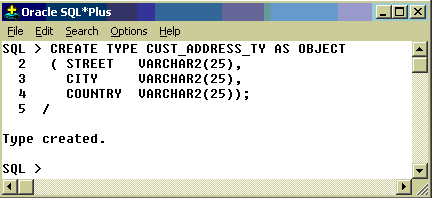
The following screenshots and other code fragments explain about how to create abstract datatypes. Also I explained about how to create tables using abstract datatypes.
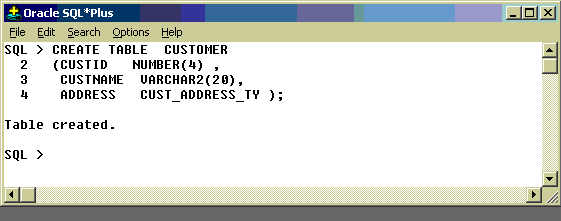
SQL > DESC CUSTOMER
Name Null? Type
—————————————– ——– —————–
CUSTID NUMBER (4)
CUSTNAME VARCHAR2 (20)
ADDRESS CUST_ADDRESS_TY
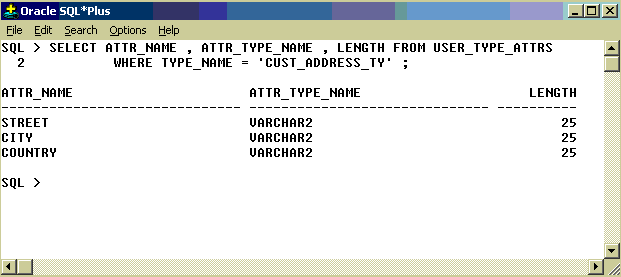
From the above example it is clear that simple DESC command will not give us any detail about Abstract Data Type. To display the details about an abstract datatype use the following syntax.
SQL > SELECT COLUMN_NAME, DATA_TYPE FROM USER_TAB_COLUMNS
2 WHERE TABLE_NAME = ‘CUSTOMER’;
COLUMN_NAME DATA_TYPE
—————————————————————
CUSTID NUMBER
CUSTNAME VARCHAR2
ADDRESS CUST_ADDRESS_TY
Inserting Data into tables with Abstract Data Type
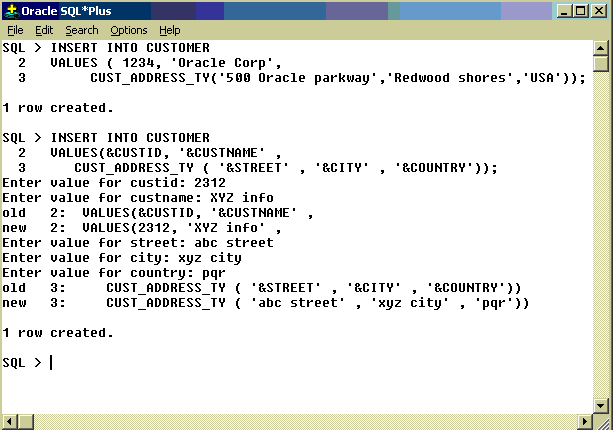
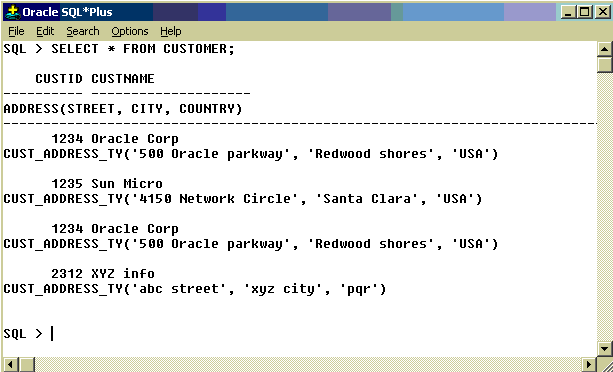
For Placing records into a table containing Abstract Data Types, we use a special method called constructor method. A constructor method is created by Oracle when you create an abstract datatype.
Example:
Displaying Records from the table
PL/SQL Collections:
A collection is a data structure that acts like an array. A collection is defined as an ordered group of elements, all of the same type. Individual element in a collection can be accessed by using index like an array in C. There are three types of collections in oracle
Nested Tables
A nested table is defined as table within another table. They can also be called one-column database tables. A nested table is collection of rows, represented as column within the table; nested table may contain many rows. Using nested tables we can store one-to-many relationships within one table. You can have multiple rows in the nested table for each row in the main table A nested table is like one-dimensional array but it has the following differences. Size of an array is fixed but nested table can grow to any size. The subscript of an Array is consecutive but subscript of a nested table may not be consecutive.
{mospagebreak}
Creating Nested Tables
The following example explain how to create a table type and then nest it in a table
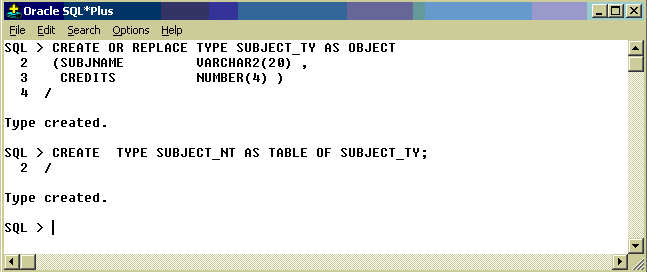
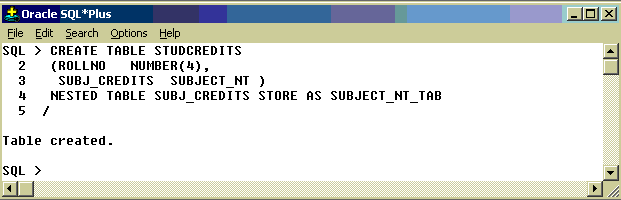
Following syntax is used to display columns of the above table we write.
SQL > SELECT COLUMN_NAME, DATA_TYPE FROM USER_TAB_COLUMNS;
SQL > SELECT TYPECODE, ATTRIBUTES FROM USER_TYPES;
TYPECODE ATTRIBUTES
—————————— ———-
OBJECT 2
COLLECTION 0
To insert values into the above table we use the below given syntax
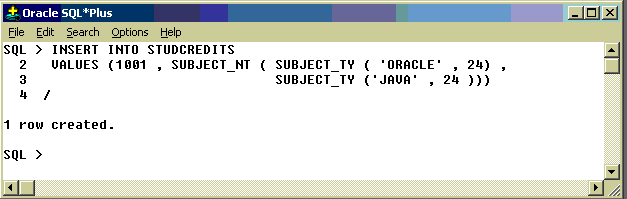
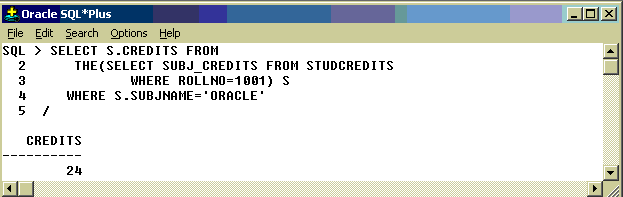
To query a nested table Oracle provides a new function THE. To select data from a field in the nested table we must have to flatten the table first. Function THE is used for this purpose.
Varrays:
Is short form for variable sized arrays. They are used to store repeating attributes in a table. Varying arrays can be created based on standard datatypes of Oracle or by using abstract datatypes.
A varying array take fixed number of elements when it is created, which can be changed at runtime. The subscript used by Varrays is sequential. We have to decide the maximum number of elements for the varying array.
Creating VARRAYS
Below given example explains creation and usage of VARRYS. Let us consider an organization developing multiple projects simultaneously. Each project has few team members and these members report to a team leader. We will have a varying array for storing members’ names. Another table is created for storing the project details.
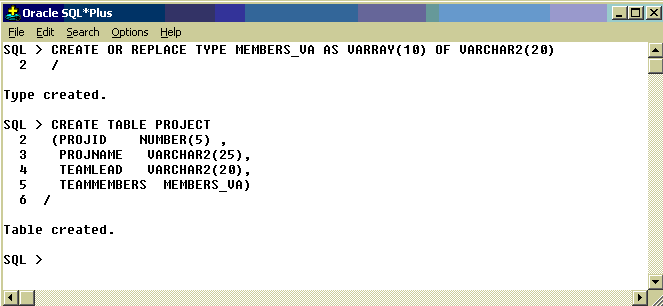
To describe table we use
SQL > DESC PROJECT
Name Null? Type
—————————————– ——– —————-
PROJID NUMBER (5)
PROJNAME VARCHAR2 (25)
TEAMLEAD VARCHAR2 (20)
TEAMMEMBERS MEMBERS_VA
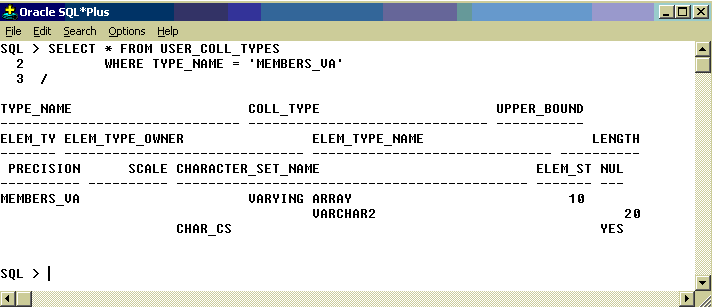
We use the following query to see the datatype of MEMBERS_VA
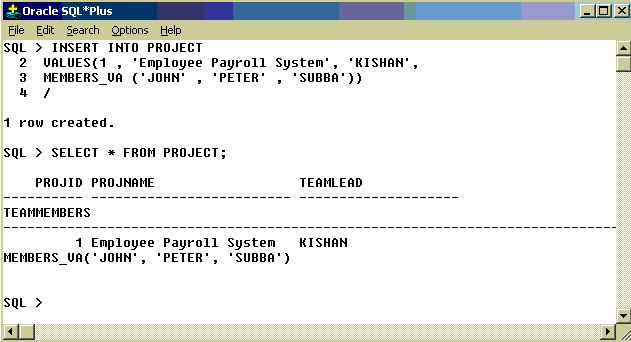
Inserting Records into Varying Arrays.
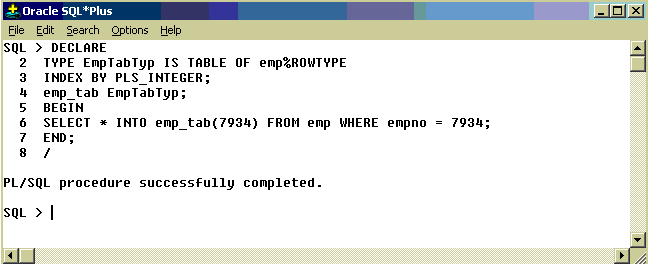
Associative arrays (or) Index-by tables:
They are sets of key-value pairs. The keys are maintained unique. The key can be either an integer or a string. The unique key is created using primary key from a table. The types raw , longraw , rowid etc are not allowed as keys.
Creating Associative Arrays
[catlist id=172].